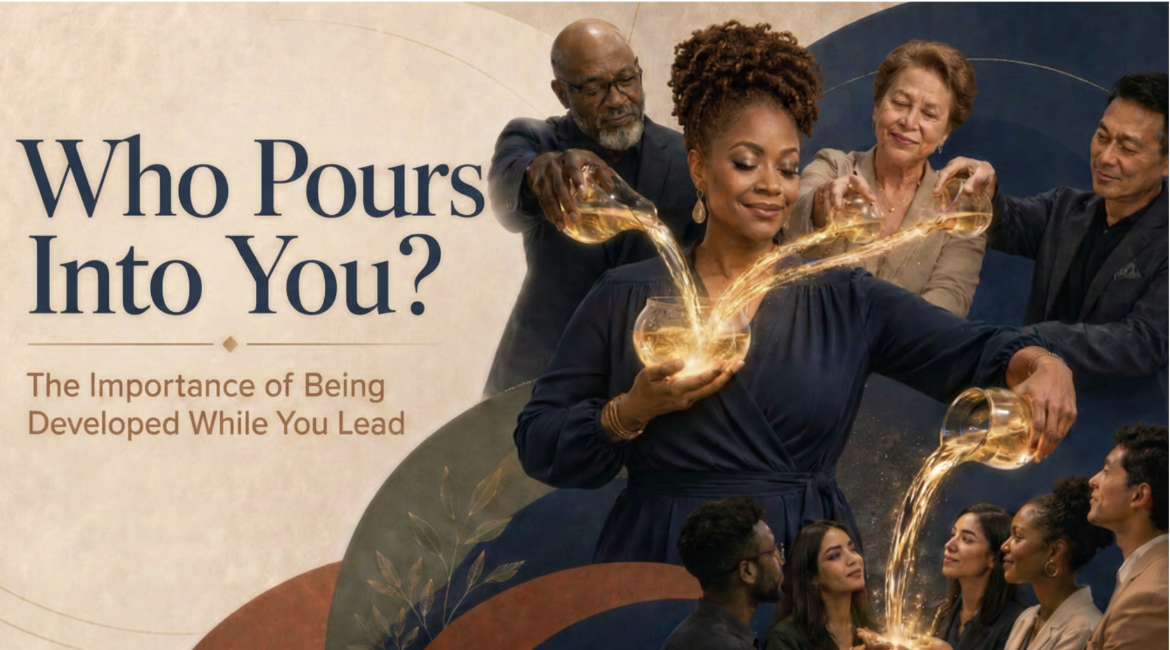
Leadership is often described in terms of what we give, including a vision, direction, encouragement, feedback, support, and opportunities for others to grow. Strong leaders pour into people consistently. But there is another question that deserves equal attention:
Who is pouring into you?
Leadership can be deeply rewarding, but it can also be isolating. As responsibilities increase, leaders find that there are fewer spaces where they can be completely honest about uncertainties, examine their leadership without judgment, and receive feedback that is both affirming and creates a challenge. Without the spaces of reflection and vulnerability, it is easy to stay busy and stagnant in growth.
Every leader needs people who are committed to not only WHAT they want to accomplish but also to WHO they want to become!
A leader can be poured into formally or informally. Informal pours may be in the form of colleagues, friends, or peers. These are people who see you through a lens and are interested and invested in your growth. Formal pours include an individual with a more official role such as a coach or mentor. Before moving forward, let’s explore the differences between a coach and a mentor.
Often the terms “mentor” and “coach” are used interchangeably. However, there are a number of differences between the roles including their purpose, expertise, and intended outcomes. In the workplace, a mentor is typically someone with experience within the organization who can help navigate the culture, complexities, and intricacies of the organization. A mentor can also be external to an organization but in a job-alike role who can push the leader’s thinking.
In contrast, a coach may be internal or external to the individual’s organization. The coach’s role is to push the thinking of the individual through thought providing questions/prompts that tap into the individual’s skills and competencies. A coach may also assess gaps in skills and competencies and support targeted development. Additionally, the coach’s work is largely driven by goals established by both the individual and the coach.
Plenty of research exists outlining the differences between mentoring and coaching. La lacono (2026) shares that coaching helps people find their own answers and build skills to solve problems through a level of self-awareness and onus of one’s professional needs. On the other hand, mentoring allows the individual to learn from someone with greater knowledge and experience in an area where they want to grow.
Having the right mentor and quality coaches who understand leadership development is one aspect of being poured into. The right people in your circle understand the technical aspects of leadership development, but they also take the time to understand you! They recognize your values, strengths, patterns, aspirations, and growing edges. They can help you make sense of what you are experiencing now while preparing you for the leadership demands that may be ahead.
Being poured into does not mean surrounding yourself only with people who agree with you or make you feel comfortable. It means developing a trusted circle of people who can see you clearly, tell you the truth compassionately, and challenge you purposefully. These are people who can celebrate your progress without overlooking your potential. They remind you of who you are while helping you become more intentional about who you desire to be.
Different seasons of leadership may also require different kinds of support. At times, you may need a mentor who has navigated a similar path and can offer wisdom from experience. At other times, you may need a coach who can ask the right questions, surface patterns, and help you translate reflection into action. You may also need trusted peers who understand the weight of leadership and can provide perspective without competition.
Developing yourself as a leader requires more than attending workshops, reading books, or acquiring new strategies. It requires relationships that create the conditions for honest reflection, meaningful feedback, accountability, and transformation.
Take a moment to consider the following provoking questions:
Who understands who you are, not just what you do?
Who can name both your strengths and the ways those strengths may become limitations?
Who challenges you without diminishing you?
Who helps you identify what you need in your current season of leadership?
Who is preparing you for the leader you are still becoming?
Where can you be honest without feeling that you must always have the answers?
Perhaps the question is not simply, "Who is pouring into me?” but also, “Who is helping me become the leader I am called to be?”
The leaders who leave the deepest legacy are often those who remained present, accepted challenges, capitalized on their assets, and invested into others, while they were also being developed. They understand that leadership meaningful because of what is poured into others.
Lo Iacono, V. (2026). What is the difference between coaching and mentoring? Symonds Research. https://symondsresearch.com/coaching-vs-mentoring/.
https://ashlees-newsletter-c84a34.beehiiv.com/p/who-pours-into-you